The 8th Pay Commission has become one of the most discussed and awaited topics among central government employees and pensioners in India. With rising inflation, increasing cost of living, and changing economic conditions, employees are expecting a significant revision in salaries, pensions, and allowances. Although there is no official notification yet, discussions and expectations around the 8th Pay Commission are gaining momentum.
In this blog, we will explain everything you need to know about the 8th Pay Commission in simple and clear language, including its purpose, expected salary hike, possible implementation timeline, and how it may impact employees and pensioners.
What is the 8th Pay Commission?
The 8th Pay Commission is expected to be the next salary revision panel constituted by the Government of India to review and recommend changes in the pay structure of central government employees and pensioners. Pay Commissions are generally formed every 10 years to ensure that salaries keep pace with inflation, economic growth, and living standards.
Previously, the 7th Pay Commission was implemented in 2016. Since nearly a decade is approaching, expectations for the 8th Pay Commission are naturally increasing.
Why is the 8th Pay Commission Important?
The importance of the 8th Pay Commission lies in its direct impact on the financial well-being of millions of people. It is not just about salary hikes, but also about improving overall compensation, including allowances and pensions.
Key reasons why the 8th Pay Commission matters include rising inflation, increasing household expenses such as education and healthcare, the need for fair government salaries, and improved retirement benefits for pensioners.
Expected Implementation Date of the 8th Pay Commission
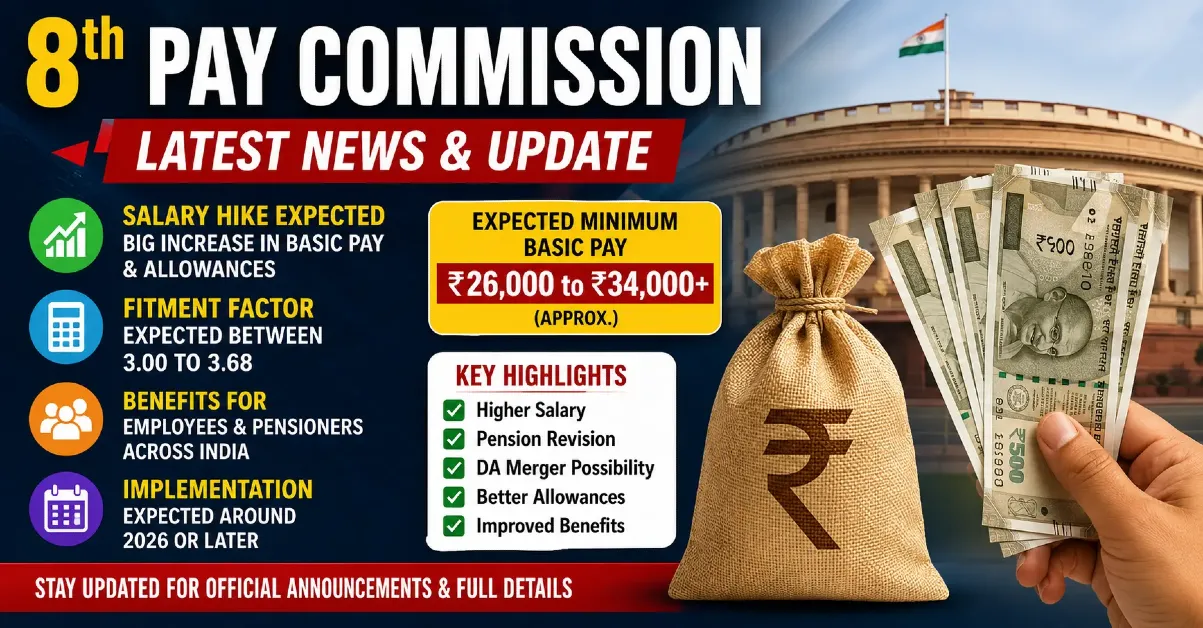
As of now, there is no official announcement regarding the formation or implementation date of the 8th Pay Commission. However, based on past trends, many experts believe that it could be implemented around 2026 or later.
Delays usually happen due to financial pressure on the government, economic conditions, and budget priorities. Despite this, employee unions continue to demand early implementation of the 8th Pay Commission.
Expected Salary Hike Under the 8th Pay Commission
One of the biggest questions employees ask is how much salary will increase under the 8th Pay Commission. Although official numbers are not available, expectations are based on earlier pay commissions.
Experts believe salaries may increase by 20 to 30 percent depending on the revised pay matrix and fitment factor. The increase in basic pay will automatically raise allowances and overall take-home salary.
Fitment Factor Expectations
The fitment factor plays a major role in salary revision. Under the 7th Pay Commission, the fitment factor was 2.57. For the 8th Pay Commission, employee unions are demanding a higher fitment factor to offset long-term inflation.
If the fitment factor is increased, it will lead to higher starting salaries, better pay levels, and improved pension benefits. However, the final decision depends on the government’s financial capacity.
Impact of the 8th Pay Commission on Pensioners
The 8th Pay Commission is extremely important for pensioners because pension amounts are directly linked to basic pay. Any revision in pay structure will positively affect pension calculations.
Pensioners may benefit through higher monthly pensions, revised minimum pension limits, and better family pension provisions. This will improve financial security after retirement.
Allowances and Other Benefits
Apart from salary revision, the 8th Pay Commission is expected to review allowances such as Dearness Allowance, House Rent Allowance, medical benefits, travel allowance, and special duty allowances.
An increase in basic pay will automatically raise these allowances, resulting in a noticeable improvement in overall income.
Economic Impact of the 8th Pay Commission
The implementation of the 8th Pay Commission will not only benefit employees but also stimulate the economy. Higher salaries lead to increased consumer spending, boosting sectors like housing, automobiles, retail, and services.
Although it puts pressure on government finances initially, pay commissions have historically supported economic growth.
How to Estimate Salary Under the 8th Pay Commission
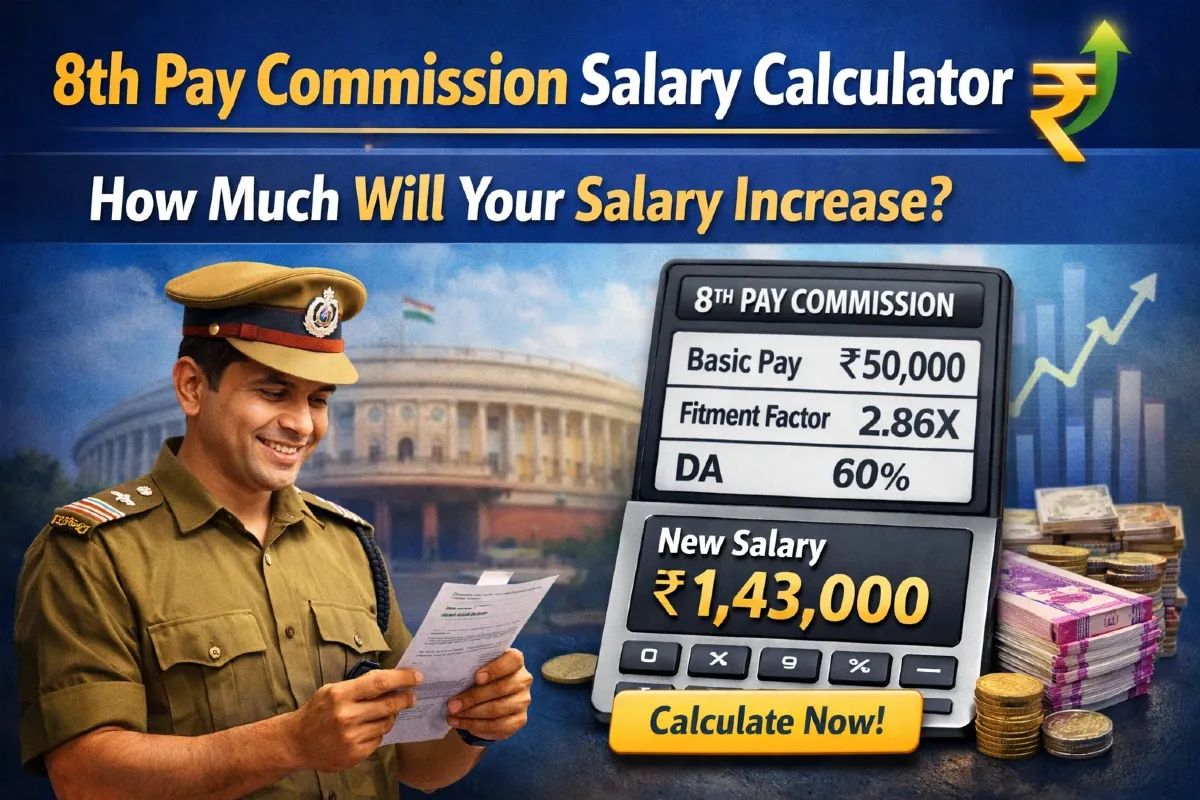
Since official figures are not available, many employees use online salary calculators to estimate their future pay under the 8th Pay Commission. These tools help in financial planning, loan decisions, and retirement planning.
Such estimates provide a rough idea of expected benefits once the commission is implemented.
Current Status and Government Stand
Currently, the government has not confirmed the formation of the 8th Pay Commission. However, discussions continue at various levels, and employee unions regularly raise the issue.
The final decision will depend on economic growth, budget availability, and policy priorities.
Final Conclusion
The 8th Pay Commission is one of the most awaited reforms for central government employees and pensioners. Although there is uncertainty regarding timelines and recommendations, its impact is expected to be significant.
Employees should stay informed, plan finances wisely, and be prepared for changes once the 8th Pay Commission is officially announced and implemented.