DA Hike 2026:Dearness Allowance (DA) hike is one of the most searched and discussed topics among central government employees and pensioners. Every six months, lakhs of employees wait for the official announcement because even a small percentage increase directly impacts monthly salary, pension, and overall financial planning. With rising inflation and expectations from the upcoming 8th Pay Commission, DA hike 2026 has become even more important.
What is Dearness Allowance (DA)?
Dearness Allowance is a cost-of-living adjustment paid to central government employees and pensioners. It is revised twice every year in January and July. DA is calculated based on the All India Consumer Price Index (AICPI). The main purpose of DA is to reduce the impact of inflation on employees’ income. When inflation rises, DA percentage increases. When inflation stabilizes, DA growth slows down.
Why DA Hike Is Important for Employees
DA hike directly increases take-home salary because it is calculated on Basic Pay. Higher basic pay means higher DA amount. An increase in DA leads to higher monthly salary, improved pension amount, better financial stability, stronger savings capacity, and improved retirement benefits. Even a small increase of 3 to 4 percent can significantly impact annual income.
Current DA Structure Under 7th Pay Commission
Under the 7th Pay Commission, DA is calculated as a percentage of Basic Pay and revised every six months. It depends entirely on AICPI index data. As DA keeps increasing over time, it may cross 50 percent or more before implementation of the 8th Pay Commission. Once a new Pay Commission is implemented, DA is usually reset to zero and merged into the new basic pay structure.
Expected DA Hike in 2026
Based on inflation trends and index movement, DA may cross 55 to 60 percent before 2026. The actual increase depends on inflation rate, AICPI monthly data, government approval, and overall economic condition. If inflation remains high, DA growth may continue steadily. Many employees believe 2026 could be a crucial transition year before 8th Pay Commission implementation.
How DA Is Calculated
Under the 7th Pay Commission, DA is calculated using the following formula:
DA Percentage = (Average AICPI – 115.76) divided by 115.76 multiplied by 100
However, employees do not need to calculate manually because online calculators make the process simple and accurate.
How to Calculate Salary After DA Hike Using 8th Pay Commission Calculator
If you want to estimate your revised salary including DA hike and expected fitment factor, you can use the 8th Pay Commission Calculator available at https://truecalculation.com/calculator/8th-pay-commission-calculator
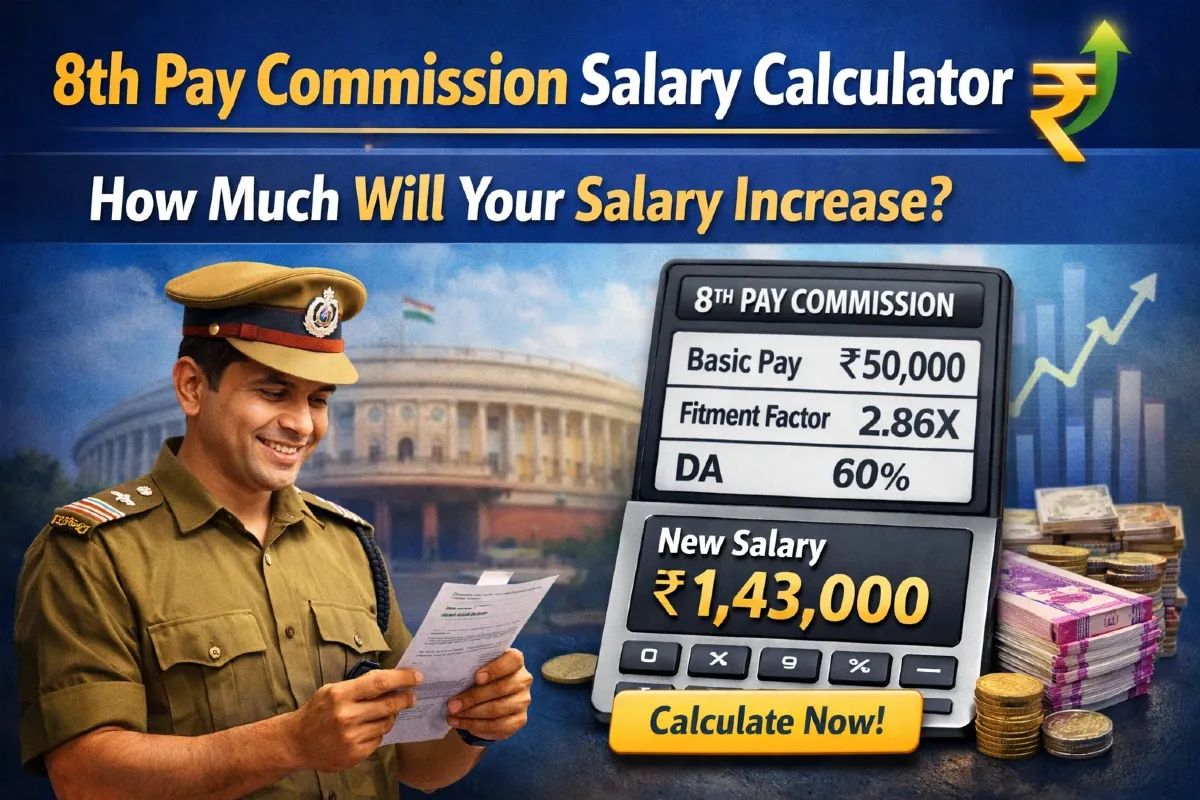
To calculate your estimated salary, open the website and go to the 8th Pay Commission Calculator. Enter your current Basic Pay, then enter the expected Fitment Factor such as 2.86 or 3.00. Add the expected DA percentage if required and click on calculate. The tool will instantly show your estimated revised salary. This helps employees understand how much their income may increase after DA hike and 8th Pay Commission implementation.
Example of DA and Salary Calculation
Suppose your current Basic Pay is ₹50,000 and the expected Fitment Factor is 2.86. If expected DA is 60 percent, your new basic pay would be calculated by multiplying 50,000 by 2.86, which gives approximately ₹1,43,000. After that, DA and other allowances will be calculated on the new basic pay. This provides a clear picture of possible salary growth in the future.
What Is Fitment Factor in 8th Pay Commission?
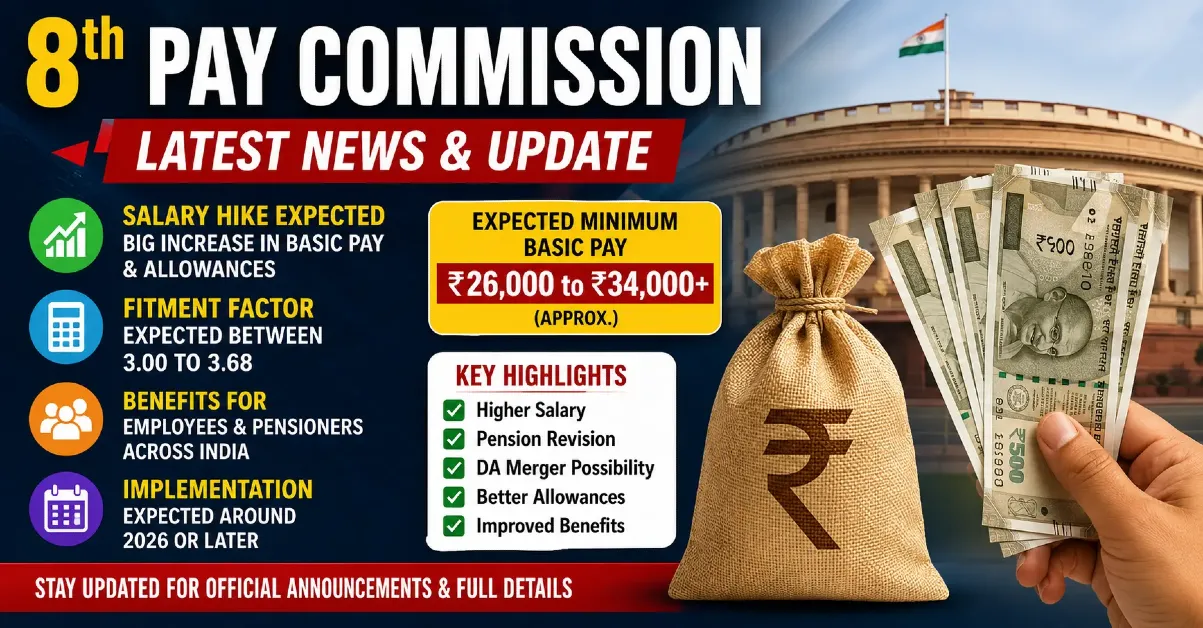
Fitment Factor is a multiplier used to revise basic pay during implementation of a new Pay Commission. In the 7th Pay Commission, the fitment factor was 2.57. For the 8th Pay Commission, experts expect it to be between 2.86 and 3.00 or possibly higher. A higher fitment factor means a larger salary increase.
Impact of DA Hike on Pensioners
Pensioners receive Dearness Relief, which functions similarly to DA. When DA increases, pension amount increases automatically. Family pension also increases, and in some cases arrears may be paid. That is why pensioners also follow every DA hike announcement closely.
Will DA Merge With Basic Pay Before 8th Pay Commission?
When DA crosses 50 percent, discussions often begin about merging DA with basic pay. If DA merges with basic pay, HRA increases, travel allowance increases, retirement benefits improve, and pension calculation base becomes higher. However, the final decision depends on official government notification.
DA Hike and 8th Pay Commission Connection
Before a new Pay Commission is implemented, DA percentage may rise significantly. After implementation, DA is usually reset to zero and a new basic pay is structured using the fitment factor. This is why employees are closely monitoring both DA hike updates and 8th Pay Commission news. Using an online calculator helps in advance financial planning.
Financial Planning After DA Hike
Whenever DA increases, employees should consider increasing investments, starting or raising SIP contributions, clearing high-interest loans, building an emergency fund, planning retirement savings, and reviewing insurance coverage. Even small increments in DA can create long-term financial benefits if managed properly.
Conclusion
DA hike plays a critical role in improving the financial stability of central government employees and pensioners. With rising inflation and expectations of the 8th Pay Commission, DA percentage is expected to grow further in coming years. Understanding how DA works and using tools like the 8th Pay Commission Calculator on TrueCalculation website can help employees estimate their future salary and plan finances more effectively. Staying informed and prepared ensures better financial security and smarter decision making.